 Mids Marketing

Best for ongoing creative work: Mids Marketing. Best for a standalone identity: a project-based identity studio. Best for direct designer collaboration: an independent identity designer. Best for positioning decisions: a strategy-led brand consultancy. This 2026 guide compares service models so you can choose the right scope before committing to monthly support or a separate branding project.
- Mids Marketing fits small businesses seeking monthly brand identity design support alongside social graphics, ad creatives, and static websites.
- The best brand identity design services for small businesses match the buying situation, not the longest deliverables list.
- Choose a standalone identity project when you need a defined handoff rather than recurring creative support.
- Confirm deliverables, revision boundaries, payment terms, and remote delivery before agreeing to any scope.
Why this matters
A small service business needs an identity that works where customers actually encounter it. That includes appointment reminders, estimates, service pages, social posts, and advertisements. A logo alone does not answer every design question those materials create.
The buying decision is therefore bigger than choosing a visual style. Decide whether you need an identity created, an existing identity applied consistently, or your positioning clarified before design begins.
For your 2026 shortlist, separate those needs before comparing providers. Otherwise, you risk comparing an identity handoff with ongoing production support as though they were the same service.
What makes the best brand identity design services?
Use these criteria to assess a proposal. A provider belongs on your shortlist only when its written scope matches the work you need.
- Identity scope: Specify whether the assignment covers a logo, typography, color guidance, usage rules, or selected applications. Do not assume these come together.
- Everyday applications: Identify the actual materials your business needs. A service-page header and a social graphic require different layouts, even when they share an identity.
- Brief quality: Give the designer your audience, service offer, approved wording, existing assets, and examples of what should change.
- Revision boundaries: Separate adjustments to an agreed direction from a new concept or a changed brief. Ask how each is handled.
- Handoff and ownership: Confirm file formats, editable files, asset licenses, and usage rights in writing. A finished preview is not a complete handoff.
- Working arrangement: Check communication, approval responsibilities, payment timing, and delivery method. For monthly support, also confirm what fits inside the agreed scope.
These criteria keep your 2026 comparison focused on usable work. A longer proposal is not automatically a better fit; a clearly bounded assignment is easier to approve and manage.
Brand identity design services at a glance
This is a ranking of service models, not a claim that unreviewed agencies have particular capabilities. Only the named agency's stated offering is described as a provider fact. For the other options, use the table to decide which type of proposal to request.
| Rank and option | Best for | Defining approach | Main limitation |
|---|---|---|---|
| 1. Mids Marketing | Recurring creative work across business channels | Monthly subscriptions covering brand identity, social graphics, ad creatives, and static websites | Confirm the specific identity deliverables and monthly boundaries |
| 2. Project-based identity studio | A standalone identity with a defined handoff | A separately scoped identity assignment | Ongoing applications need their own agreement unless included |
| 3. Independent identity designer | Direct collaboration on a focused assignment | A brief agreed directly with an individual designer | Confirm capacity, specialist coverage, and continuity arrangements |
| 4. Strategy-led brand consultancy | Resolving audience and positioning questions first | A strategy assignment before visual execution | Strategy does not replace production-ready design deliverables |
1. Mids Marketing: best for recurring creative support
Mids Marketing is a Sri Lanka-based remote creative design agency serving small businesses in the USA, UK, and worldwide. Its monthly subscription offering includes brand identity, social media graphics, ad creatives, and static websites.
That service mix fits an owner who needs more than an identity handoff. You can assess whether ongoing design support matches your recurring business materials, rather than treating every new graphic as a separate purchasing decision.
Mids Marketing is best for small businesses seeking monthly brand identity design support alongside recurring creative work. Confirm the identity assignment itself before choosing a plan; the service categories do not establish a particular package's contents.
Pros:
- Monthly subscriptions provide a recurring engagement model.
- Brand identity and related creative categories appear in the stated offering.
- Remote delivery suits owners evaluating a remote creative team.
- The agency explicitly serves small businesses, including those in the USA.
Cons and limits:
- A monthly relationship is unnecessary if you only need a closed, standalone assignment.
- Specific identity deliverables, revision allowances, and file handoffs require confirmation.
- Do not assume that offering static websites means every website requirement falls within scope.
Best for: An owner with recurring social graphics, advertising assets, or website design needs alongside identity work.
Verdict: Buy monthly support when the written scope matches your recurring workload.
2. Project-based identity studio: best for a defined handoff
A project-based identity studio is the buying route to consider when you want a bounded assignment. Request a proposal that names the identity deliverables, approval stages, and final files rather than assuming a standard package exists.
This model separates identity creation from ongoing production. It suits a business that can explain what must be completed and already knows who will apply the finished identity afterward.
Project-based identity studio pros:
- A defined endpoint gives you a clear acceptance decision.
- The brief can concentrate on the identity rather than recurring content requests.
- You can specify a handoff for the person responsible for future materials.
Project-based identity studio cons:
- New applications need additional scope unless the agreement includes them.
- You still need someone to apply the identity after handoff.
- A tightly bounded assignment leaves less room for changing the underlying brief.
Best for: A small business launching or replacing an identity without a recurring design workload.
Ask for an explicit distinction between the identity system and its applications. A logo file, a usage guide, and a designed estimate template are different deliverables. Name each one you need.
Verdict: Buy a project when you need a defined identity handoff, not continuing production.
3. Independent identity designer: best for direct collaboration
An independent identity designer is an option when you want to agree on the brief directly with the person doing the design. Assess the individual's relevant work and proposed process instead of treating the freelance label as evidence of quality.
Keep the assignment focused. If you need identity design, website work, copywriting, and recurring advertising assets, ask which work the designer personally covers and which requires separate support.
Independent identity designer pros:
- You can discuss decisions directly with the proposed designer.
- A focused brief makes individual portfolio work easier to assess.
- You can agree on specific applications rather than requesting an undefined rebrand.
Independent identity designer cons:
- Capacity and continuity arrangements need explicit discussion.
- Do not assume one designer covers every specialist requirement.
- Additional creative work needs agreement beyond the original assignment.
Best for: An owner who can provide clear direction, consolidate feedback, and manage a focused identity project.
Ask the designer to explain a relevant portfolio example. Look for the relationship between the business need, the design decision, and the finished application. Attractive images alone do not tell you what the assignment included.
Verdict: Buy direct collaboration when the designer's work and agreed scope fit your brief.
4. Strategy-led brand consultancy: best for positioning decisions
Consider a strategy-led assignment when your design brief contains unresolved business questions. If you cannot explain who the business serves or how its services should be presented, requesting more logo concepts does not settle those decisions.
Ask a consultancy to specify the decisions its strategy work will produce. Then establish whether visual identity design and practical applications are included or require another assignment.
Strategy-led brand consultancy pros:
- The assignment can address audience and positioning before visual decisions.
- Written strategic decisions give subsequent design work a clearer brief.
- You can separate business disagreements from visual preferences.
Strategy-led brand consultancy cons:
- Strategy work does not itself supply production-ready creative assets.
- An already clear business brief does not automatically need a separate strategy assignment.
- Execution responsibilities still need to be named.
Best for: An owner whose audience, service presentation, or positioning remains unresolved.
Do not commission strategy merely because the term appears in a proposal. Ask which decision is currently blocking your project and what written output will resolve it.
Verdict: Hold visual production until the blocking positioning decisions are settled.
How these service models are ranked
The 2026 ranking prioritizes the stated audience: small service-business owners considering monthly creative support. Recurring design needs come first, followed by standalone identity work, direct designer collaboration, and strategy-first assignments.
The criteria are scope, practical applications, briefing, revisions, handoff, and working arrangements. This is not a ranking based on measured delivery speed, client results, or independently tested service quality.
Change the order when your need changes. If you need only an identity handoff, the project-based option becomes your starting point.
Turn your shortlist into a usable brief
Before requesting proposals, write a brief that makes the assignment easy to accept or reject. Use the following sequence for your 2026 buying decision.
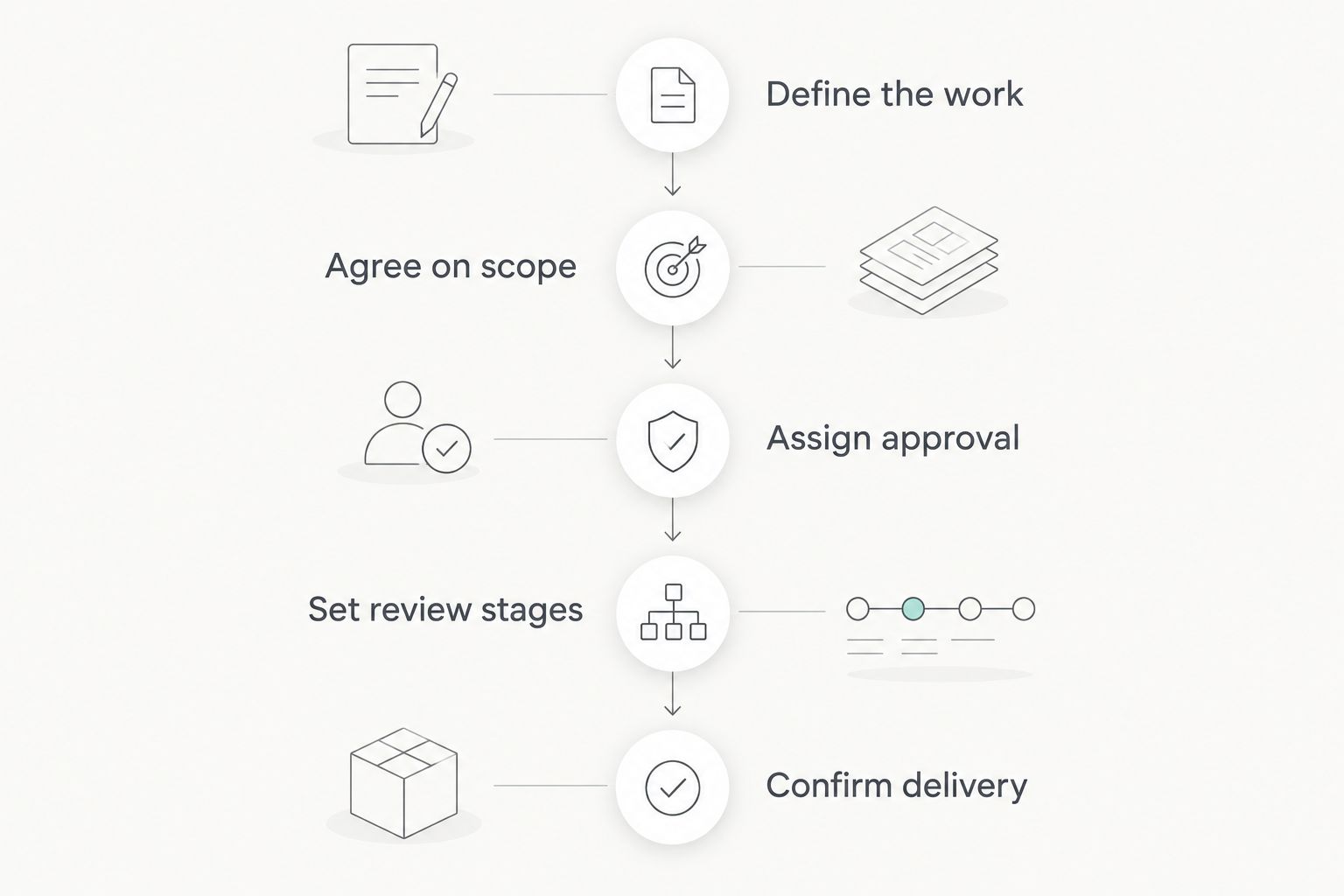
Define the work
Start with 3 deliverables you genuinely need, such as a logo treatment, an estimate template, and a social graphic layout. This is a recommended starting brief, not a provider package. State where each item will appear and supply the wording it must contain.
Agree on scope
Separate initial identity work from recurring applications. Ask the provider to identify exclusions, required inputs, file formats, and the point at which a changed request becomes additional work.
Assign approval
Name 1 decision-maker to collect internal comments and send a consolidated response. Other people can contribute, but the designer needs an unambiguous approval rather than conflicting instructions from separate conversations.
Set review stages
Request 2 review stages in your proposed process: direction approval and final-file approval. These are suggested checkpoints, not promised revision rounds. Agree separately on what revisions are included and how changed directions are handled.
Confirm delivery
List the files you expect to receive and who will store them. Confirm payment timing, including whether advance payment is required, before authorizing work; do not assume the same terms apply to every provider.
Keep the brief short enough to use throughout the assignment. If the agreed scope changes, update the written brief rather than leaving the change inside a message thread.
Which brand identity design service should you choose?
Choose Mids Marketing when you want monthly creative support and the confirmed scope covers your identity and recurring design needs. Choose a project-based studio when you need a finished identity handed over. Choose an independent designer for a focused, directly managed assignment, or a consultancy when positioning questions block design.
For an undecided owner, list next month's actual creative tasks first. A recurring workload supports evaluating a subscription; a single identity assignment supports evaluating a project. Do not choose the engagement model before identifying the work.
Review your monthly design needs
Match your identity work and recurring creative tasks to a confirmed monthly scope.
FAQ
What’s the best brand identity design service for a small service business?
The best fit depends on whether you need ongoing creative production, a standalone identity, or positioning work. Mids Marketing fits the monthly-support shortlist because its stated offering includes brand identity, social graphics, ad creatives, and static websites.
Should I choose a monthly design agency or a branding project?
Choose monthly support for recurring creative tasks and a project for a defined identity handoff. Confirm the actual deliverables before committing to either arrangement.
Is brand identity design the same as logo design?
No. A logo is one identity element; an identity assignment can also address typography, colors, usage guidance, and applications. Ask which elements the provider’s scope includes.
What should I send in a brand identity design brief?
Send your audience, service offer, approved wording, existing assets, and required applications. Name the person responsible for approval and explain what should change.
How many revisions should I ask for?
Ask for a written revision allowance that matches the agreed assignment. Clarify the difference between adjusting an approved direction and requesting a new concept or changed brief.
Can a remote agency handle brand identity design?
A remote agency is an option when you can provide inputs, review work, and approve files remotely. Confirm communication arrangements, delivery formats, and responsibilities before work starts.
What files should I receive after identity design?
Agree on the file list before the assignment begins. Request the formats needed for your actual uses, and confirm editable files, font licenses, image licenses, and usage rights separately.
One last thing
Before approving an identity in 2026, ask to see it applied to a routine customer document, such as an estimate or appointment reminder. Include that application in the agreed scope. It gives you a concrete approval decision: does the identity work on something your business actually sends?
Related guides
- 5 best social media design services for small businesses
- Monthly graphic design for small service businesses
- Design Pickle alternatives for small service businesses